




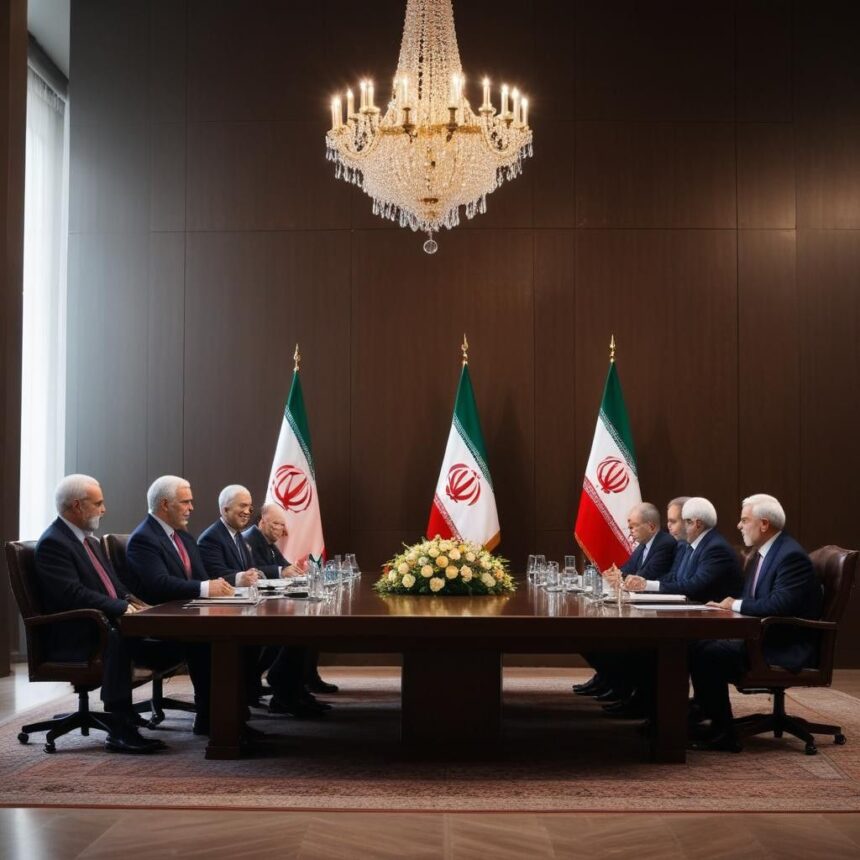
Geopolitical De-escalation: The Return of Iranian Crude and Liquidity Implications
The prospect of renewed US-Iran talks is triggering a shift in global energy sentiment. By signaling a potential easing of the “Iran risk premium,” markets are pricing in a supply-side expansion. For institutional capital, this represents a disinflationary catalyst that could alter the trajectory of central bank policy and global liquidity conditions.
The Liquidity Channel: Why Oil Prices Matter
Liquidity is the lifeblood of global markets, and energy prices act as a primary drain on that liquidity. When oil prices remain elevated, they function as a stealth tax on consumers and corporations, siphoning capital away from discretionary spending and capital expenditure. A potential increase in Iranian oil supply acts as a liquidity injection by lowering input costs across the supply chain, thereby bolstering corporate margins and easing the burden on central banks to maintain restrictive interest rate environments.
Impact on Portfolio Allocation:
- Energy-Intensive Sectors: Logistics, airlines, and heavy manufacturing stand to see immediate margin relief, potentially increasing their attractiveness to value-oriented institutional portfolios.
- Central Bank Policy: Lower energy inputs reduce headline inflation, providing the Federal Reserve and other major central banks with the flexibility to pivot toward a more accommodative stance, thereby supporting broader risk-on sentiment.
- Currency Dynamics: Energy-importing economies, particularly in the EU, may see a stabilization in their terms of trade, offering a reprieve to currency valuations that have suffered under high energy-import costs.
Current market movements are driven by diplomatic signaling, not physical inventory shifts. In quantitative terms, we are seeing a contraction in implied volatility (IV) premiums associated with geopolitical tail risks. However, until official sanctions are lifted and physical barrels enter the global ledger, the market remains susceptible to “reversal shocks.” Investors should track the spread between Brent and WTI, as well as the term structure of the futures curve—a shift toward contango would suggest the market is beginning to price in a structural supply surplus.
Does a drop in oil prices guarantee a bull market?
Not necessarily. While lower energy costs are disinflationary, they must be viewed alongside aggregate demand. If oil prices fall because of a cooling global economy, it may signal an impending recession rather than a supply-side win. We are monitoring the “demand-side vs. supply-side” narrative closely.
How does this impact the EV luxury segment?
High fuel costs have historically accelerated the transition to electric vehicles. A sustained decline in gasoline prices may reduce the immediate “cost-of-ownership” urgency for luxury ICE vehicle buyers, potentially lengthening the adoption curve for premium EV models in the short-to-medium term.
🛠️ Featured General Resources
“Quality research is supported by the right tools and systematic workflows.”
Amazon Global
Equip your workstation with professional-grade productivity tools.
Disclosure: As an Amazon Associate, Aether-Flow earns from qualifying purchases.